Austrian theory in one hour[UNDER CONSTRUCTION]
The course explores the principles of Austrian economics, emphasizing the subjective theory of value, the nature of economic exchanges, and the implications of misinvestments driven by artificial interest rate manipulations. It covers the historical context of business cycles, critiques government interventions, and explains how these ideas relate to modern concepts of capital, money, and human decision-making within economic systems. Ultimately, it highlights the challenges of predicting economic outcomes due to the inherently subjective nature of value and the complexities of human behavior.

Value is created in a trade
Value is revealed and created through acts of exchange, where both parties believe they gain greater value post-transaction. This concept challenges traditional labor theories of value and highlights the measurable nature of voluntary deals. Carl Menger and Ludwig von Mises developed this theory in the late 19th and 20th centuries, respectively.

Capital theory
Investment goods and capital are rooted in Böhm von Bawerk's theories, emphasizing negative utility of labor and time preference. Efficient production requires delayed consumption and investment in capital, which ultimately yields returns. Despite this, subjective value theory explains the continued appeal of ideologies like Marxism, as individuals assign varying values to different beliefs and needs.
Business cycle theory
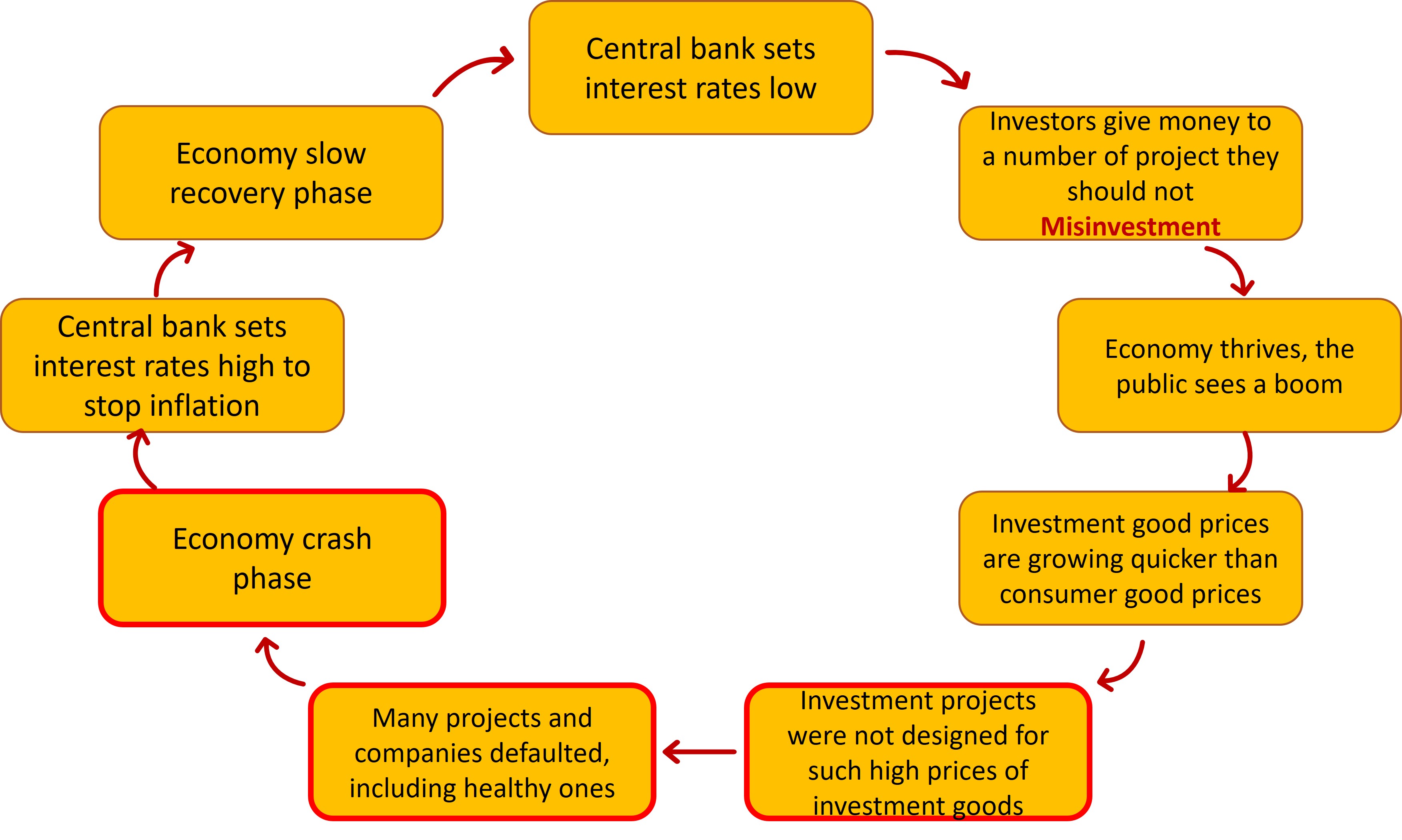
The economic cycle, influenced by low interest rates and fiat money, inevitably leads to company defaults and rising unemployment, as outlined in the Mises-Hayek theory. While predictions of exact crashes are not feasible due to the subjective nature of value, certain indicators, such as investment goods, can still provide insights into market conditions. However, the limitations of mathematical models in capturing human behavior complicate the ability to predict economic downturns.

Capital markets
The development of a basic theory of capital markets reveals how market interest rates reflect project returns, influencing investment decisions. Government regulations on prices, whether for goods or interest rates, are often ineffective or harmful, leading to misinvestment and economic inefficiencies. Central Banks can artificially lower interest rates to stimulate the economy, but this can result in resource misallocation and economic distortions.

Final words
The lack of popularity of the Austrian School of Economics stems from its unappealing advice to politicians, who prefer more favorable theories like modern monetary theory. Politicians prioritize proposals that promise immediate improvements for voters rather than the austere recommendations of economists. Notable figures of the Austrian School include Menger, Mises, and Hayek.

Money theory
A value theory suggests that the most convenient commodity for exchange becomes money, traditionally gold. In a free market, only one commodity emerges as money, while fiat currencies face restrictions due to government policies. The potential of Bitcoin as a future money remains uncertain, as the market has historically resisted forced adoption of paper currency.

Austrian School of Economics: beginning
Economics is the study of human decision-making and interactions with value, grounded in Carl Menger's Subjective Theory of Value. His work emphasizes the significance of individual choices in economic outcomes. This perspective allows for a nuanced understanding of economic behavior, distinct from traditional theories.
Is this theory working
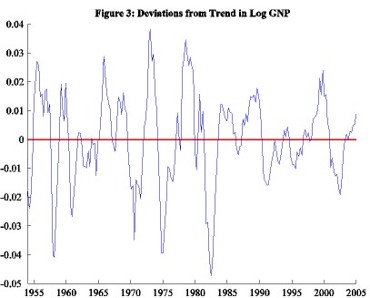
No single economic theory can explain all historical business cycles, though Austrian economics provides insights into events like the Great Depression and recent market shocks. The COVID-19 stimulus and previous quantitative easing have injected substantial liquidity into markets, raising concerns about potential economic crashes. Current trends indicate rising raw material prices and shortages, emphasizing the need for caution.

Making decisions
Human decisions are influenced by complex neural networks that assign variable weights to inputs based on subjective internal values shaped by genetics, environment, and experience. This renders the measurement of human values inherently subjective and variable, complicating their utility in economics. Despite advances in neuroscience, accurately modeling these processes remains a significant challenge.